
Read the text and complete the activities below.
We just hit 20,000 views on the blog! To celebrate this milestone, let’s look back at how the world functioned two decades ago. In the mid-2000s, the digital landscape was a completely different beast. Here is how we lived, played, and communicated back then.
The Era of "Stationary" Socializing
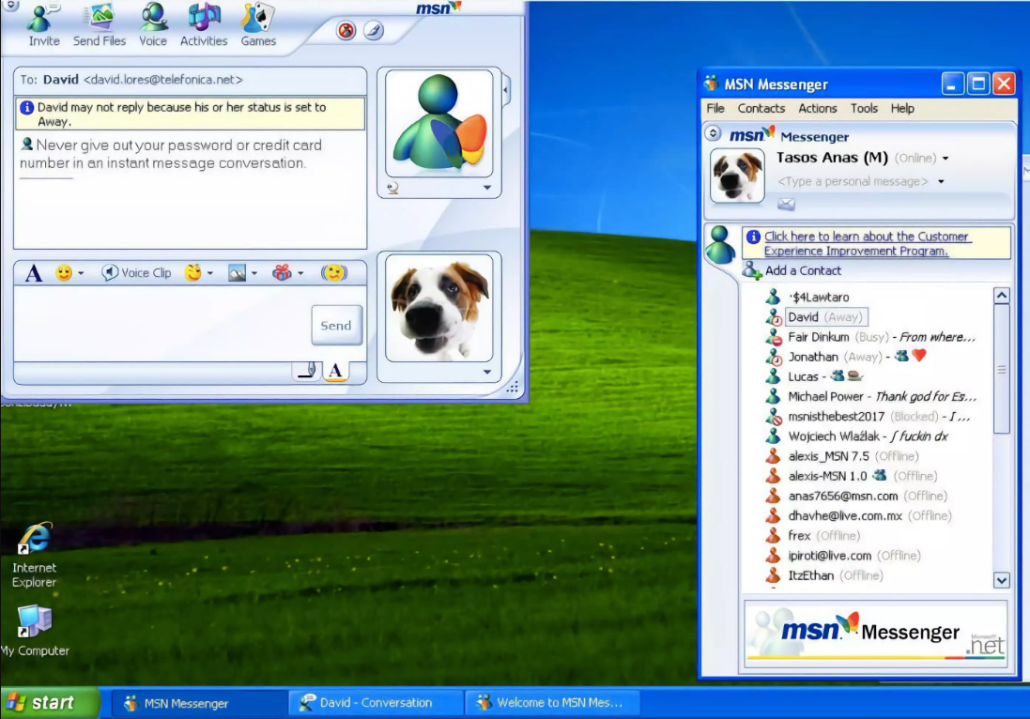
Before the era of 24/7 connectivity, socializing required a desk and a chair. To talk to friends, you had to wait until you were home to sign into MSN Messenger on a bulky desktop computer. Mobile phones were primarily for calling or sending short, expensive SMS messages. Since there were no "blue ticks" or instant updates, people actually had to commit to plans—you couldn't just text "I'm 5 minutes late" while walking down the street!
Physical Media and the "Rental" Culture
Streaming was a futuristic concept. If you wanted to watch a movie on a Friday night, you made a physical trip to a rental store to pick out a DVD. Music fans still carried CD players or early, low-capacity MP3 players. "Going viral" wasn't a thing yet; YouTube was in its infancy, hosting grainy, low-quality clips. We discovered new trends through magazines or radio, rather than through personalized algorithms.

Analog Navigation and Paper Trails
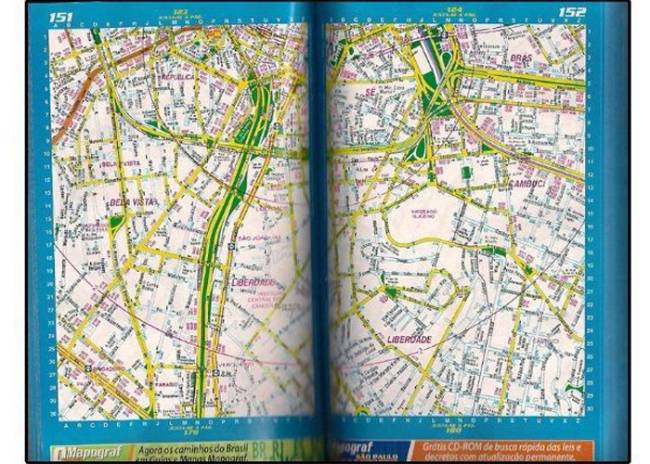
Getting lost was a real possibility. Without Google Maps, travelers relied on printed directions from websites like MapQuest or large, folded paper atlases. Staying informed meant waiting for the evening news or buying a newspaper. Blogs were the "new frontier" of personal expression, and reaching 20,000 people was a massive achievement that usually required a professional marketing budget. Today, we achieve it through community!
ACTIVITIES
Exercise 1: Multiple Choice (Interpretation)
Select the best answer for each question.
1. What does the text suggest about socializing 20 years ago?
a) It was more mobile and flexible than today.
b) It was more dependent on being in a specific physical location.
c) It was faster due to the invention of MSN Messenger.
d) People used "blue ticks" to track their friends' replies.
2. How did people typically find new music or movies?
a) Through personalized algorithms on streaming apps.
b) By waiting for them to go viral on YouTube.
c) Through traditional media and physical stores.
d) By downloading entire libraries onto high-capacity phones.
3. According to the text, why was "making plans" different in the mid-2000s?
a) People were more likely to cancel at the last minute.
b) Communication was too expensive to change plans easily.
c) Everyone used MapQuest to meet at the exact same time.
d) SMS messages were the only way to send locations.
4. What is mentioned about the quality of online videos back then?
a) They were professional and used for marketing.
b) They were mostly long-form documentaries.
c) They were often low-resolution and unprofessional.
d) They were already being used by influencers to reach 20k views.
5. What is the author's tone regarding the 20,000 views milestone?
a) Indifferent, as technology makes it easy now.
b) Nostalgic but appreciative of the current community.
c) Annoyed that it was harder to reach people in the past.
d) Critical of how magazines used to handle marketing.
Exercise 2: Matching Headings
Match the extra descriptions (A-E) to the three topics in the text.
Topics:
1 - The Era of "Stationary" Socializing
2 - Physical Media and "Rental" Culture
3 - Analog Navigation and Paper Trails
1 - The Era of "Stationary" Socializing
2 - Physical Media and "Rental" Culture
3 - Analog Navigation and Paper Trails
A. Finding your way required preparation and physical tools like maps.
B. Digital connection was tied to a fixed computer at home.
C. Sharing opinions through blogs was a brand-new and difficult way to be heard.
D. Consuming entertainment involved physical objects and visiting stores.
E. Instant messaging was not something you could do while on the move.
Exercise 3: Gap Fill (Vocabulary)
Fill in the blanks with the correct word from the text: Algorithms, Bulky, Grainy, Infancy, Milestone.
1. Reaching 20,000 views is a significant for any content creator.
2. In 2005, YouTube was still in its and didn't have many users.
3. Most people had monitors that took up half of their desks.
4. It was hard to see what was happening in those old videos.
5. Today, social media decide what content we see every day.



0 Comentários
Comente, responda, interaja em inglês! Lembre-se: usar o inglês ativamente transforma o aprendizado <3